|
||
Chinese New Year in Prasanthi 2014Video Webcast of the Chinese New Year Celebrations at Prasanthi Nilayam, Day 2 - Feb 06 2014
|
||
|
Drama on the life of Confucius… Continuing with the spirit of Chinese New Year Celebrations, this evening Sai Youth from Indonesia presented a drama on the life of Chinese Philosopher and Spiritual Master Confucius here in Prasanthi Nilayam. Confucius had brought revolutionary changes in China with his unsurpassed wisdom, affecting the society at large, positively. Earlier, the programme for the evening commenced at 1650 hrs. with the Malaysian Choir taking the honours presenting a Spirited Choir programme. Singing tunes of religious universal harmony the youth, comprising both men and women, signed off in style melodiously singing “Akhanda Jyothi Jalaao Sai Mana Mandir Mein…”, fervently praying to Bhagawan for His munificence.

Dr VK Ravindran, Chairman, Zone 4, SSSSO – Overseas then addressed the assembly introducing the ensuing session. Wishing one and all a Happy Holy Chinese New Year, Dr Ravindran introduced the speaker for the session, Bro. Yong KW from Malaysia, who deliberated on the theme “Chinese Culture and Traditions”.
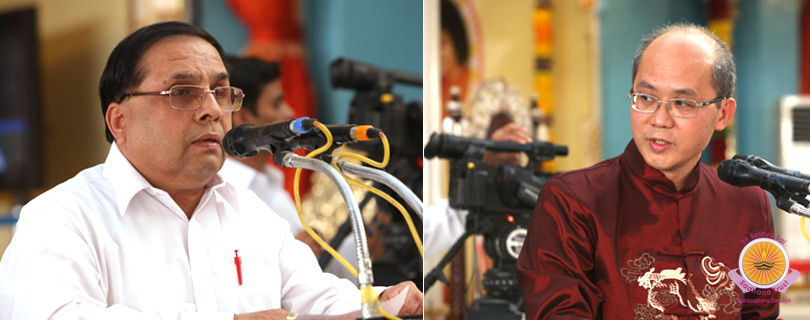
Bro. KW Yong whose maiden pilgrimage to Prasanthi was in the year 1994 spoke of Sai as the Mastermind. Extensively quoting Bhagawan, Yong said: Bhagawan is the Mastermind of our lives; transformation happens when we align our lives with His laws. Bro. Yong who is currently the Wise Chairman of Sathya Sai Organisations – Malaysia also divulged in brief details of the Organisational initiaitive to take Bhagawan’s messages to the masses through publishing media.
Sai Youth, Youth Vikas from Indonesia, then presented a drama entitled “The Confucius – The Righteous” on the life of legendary Chinese philospher, teacher and Spiritual Master Confucius who lived over 2500 years ago. The presentation was set in a homely background having a grand father and grand daughter engaged in discussions leading unto Sai, Nine Point Code Of Conduct. Caught off guard by the grandfather, for knowing Sai as Everything, but not practising His 9-Point Code Of Conduct, when the girl turned perplexed, a consoling and caring grand father, pacifyied the girl narrating the ideal life story of Confucius.
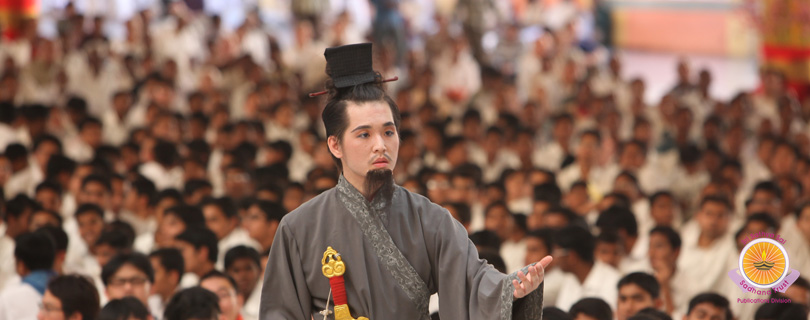
Showing some of the noted incidents from his illustrious life, highlighting his golden rule: “What we do not expect others do to us then do not do it to others”, the presentation illustrated how Confucius could bring radical changes in Chinese civilisation, helping the society from the clutches of despicable inhuman rules. Even as a famous Confucius subsequently earned the warth of jealous men in the palace, resulting in him being exiled from the Kingdom, Confucius travelled across the country preaching his philosophy to the eager and anxious ones only to return much wiser helping humanity at large, leaving his footprints in the sands of time.
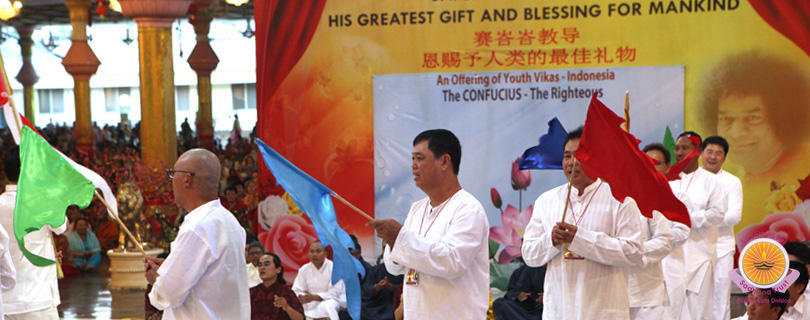
A couple of dance presentations followed before the studnets burst into Bhajans that ended with Bhagawan singing Thursday Special “Ksheerabdi Shayana Narayana…” Mangala Arathi at 1830 hrs. marked the end of the proceedings. II Samastha Lokah Sukhino Bhavantu II
|
||
Chinese New Year in Prasanthi 2014Video Webcast of the Chinese New Year Celebrations at Prasanthi Nilayam, Day 1 |
||
|
January 1 has come and gone and 2014
is already on its way. However, in China and many South East Asian Nations,
namely Singapore, Hong Kong, Malaysia, Thailand, Taiwan, Indonesia etc. it is
time for Chinese New Year celebrations.
Chinese New Year celebrations for 2014, also known as the Spring Festival or
Lunar New Year, started on the 23rd day of the 12th lunar month of the Chinese
calendar and would last for 15 days. This New Year is identified as year of
Horse, symbolising power and vitality.
This is the 17th Chinese New Year in Prasanthi Nilayam in the immediate Divine Presence of Beloved Bhagawan. The first ever Chinese New Year was celebrated in the year 1997.
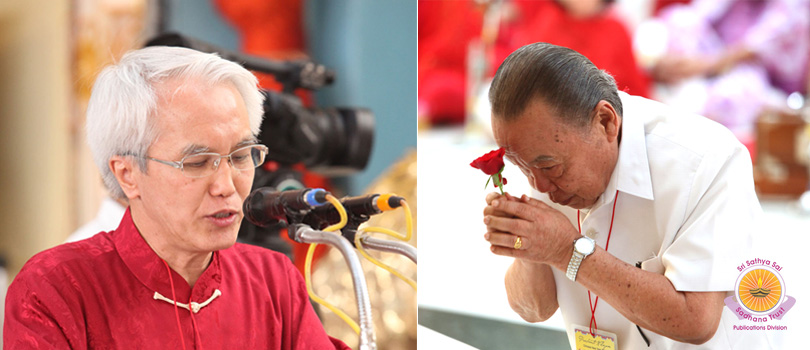
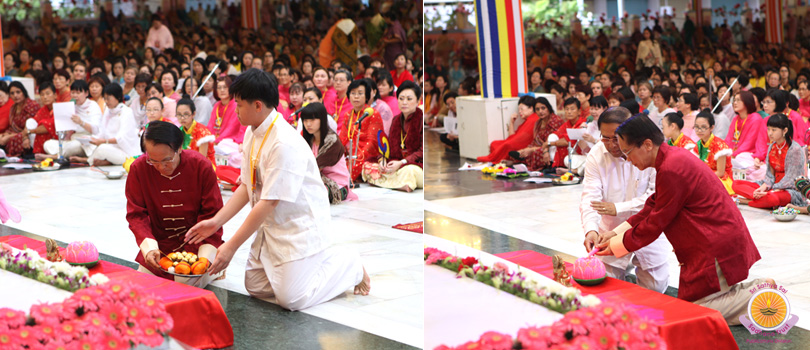
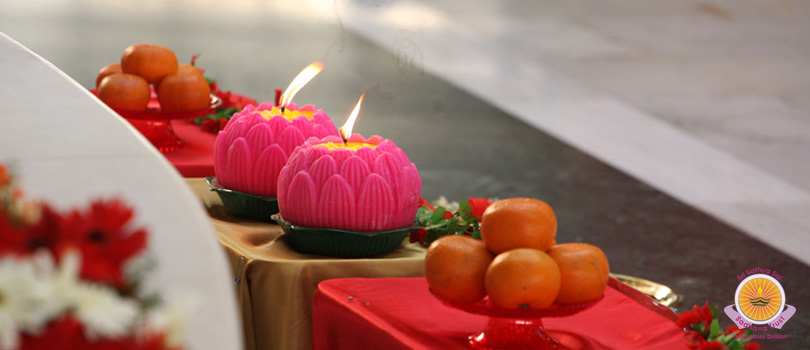
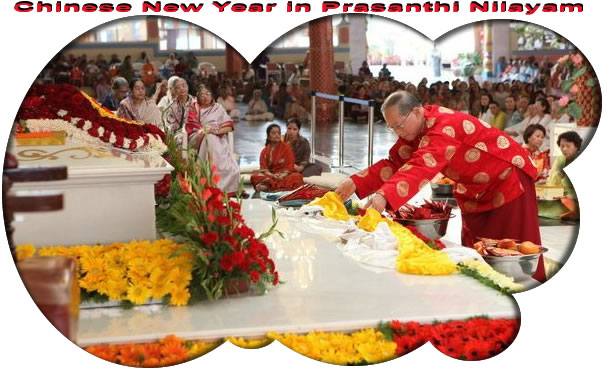
This evening, the programme commenced at 1650 hrs. in traditional religious style with lighting of the lamp, done jointly by the Zonal Chairman Dr VK Ravindran and Chinese New Year Coordinator Billy Fong. Traditional offering of delicacies to Bhagawan followed next, offered by children from Malaysia and Indonesia. Sacred chants of Kuan Yin Mantra came next before Bro. Billy Fong took over to introduce the ensuing session to the august assembly.
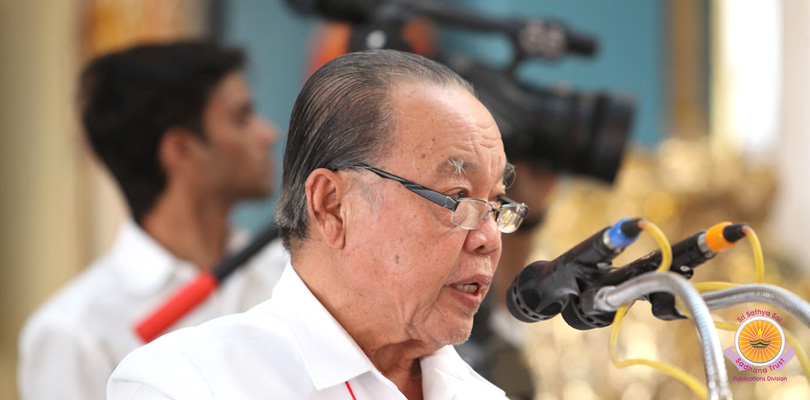
Delivering his introductory speech Bro. Billy Fong introduced the the theme of Chinese New Year 2014, “Sai Baba’s Teachings – His Greatest Gift and Blessings For Mankind” before dwelving in brief detail about the greater significance of Bhagawan’s Teachings. He then introduced the main speaker for the session, Bro. Phoa Krishnaputra. Bro. Kuan Krishnaputra’s talk was on the greater significance of Kuan Yin Mantra. The octogenarian from Medan, Indonesia in his brief speech enumerated his evolutionary spiritual journey, praying to Mother Tara, following Buddhism.
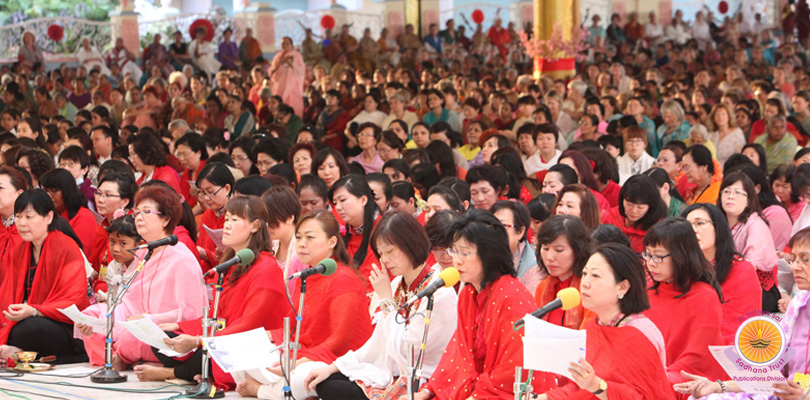
Serenading the Lord, wishing Him “Happy Chinese New Year’ the group then burst into a spell of melodious devotional session, singing an assortment of devotional numbers, in Chinese, Chinese-English, Sanskrit and English. Spreading devotional ambience around, lighting up the hearts present they sang “Remind Me My Lord…Remind Me My Lord…You Are There…” vibrating the Sai Kulwant with rare mix of Bhava and Bhakti.

Bhajans continued and ended with Mangala Arathi at 1830 hrs. Hundreds of devotees from Malaysia, Indonesia, Singapore, Thailand, Hong Kong, Taiwan, Australia, South Africa, USA, Japan, Brazil, Russia and Italy joined together this year celebrating Chinese New Year in the immediate Divine Presence in Prasanthi Nilayam. The two-day Chinese New Year would continue tomorrow evening with cultural presentations by Malaysia and Indonesia. II Samastha Lokah Sukhino Bhavantu II
|
||
| Archive | ||
Chinese New Year in Prasanthi.Friday, February 15th, 2013
Text & photo source - copyrights: Sri Sathya Sai Sadhana Trust -
sssbpt.org - Radiosai.org Prasanthi Diary -
theprasanthireporter.org | Web layout - Photo
graphic design : saibabaofindia.com "SBOI" |
Sri Sathya Sai Sadhana Trust & Sri Sathya Sai Media Foundation - |
||
| HOPING for
greater insistence and practice of Filial Piety, respect and reverence for
parents, hundreds of devotees from South East Asian Chinese speaking countries
namely, Indonesia, Malaysia, Thailand, Hong Kong and Singapore assembled in
Prasanthi celebrating the advent of the 4013th Lunar
Chinese New Year this evening here in Prasanthi Nilayam. This year’s Chinese New Year is the year of the snake and Chinese all over the world celebrated the advent last week, on Saturday, 9 February with raucous celebrations.
H..O..P..E..Honouring Of Parents Everyday was the theme of this year’s New Year and speaking on the occasion Mr Billy Fong, coordinator for the celebrations, from Malaysia, stressed on the greater significance of ‘filial piety’, honouring parents as practised in the Chinese culture and tradition.
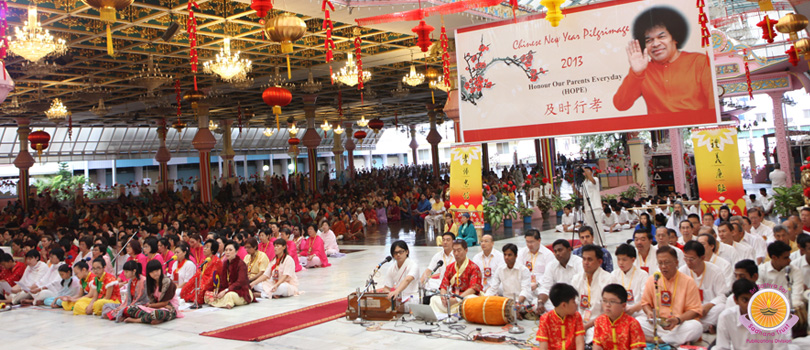
Earlier, the programme commenced with holy Rudram chanting by the ‘chinese’ that was followed by traditional offering of delicacies, to Bhagawan, by children from Indonesia and Malaysia.
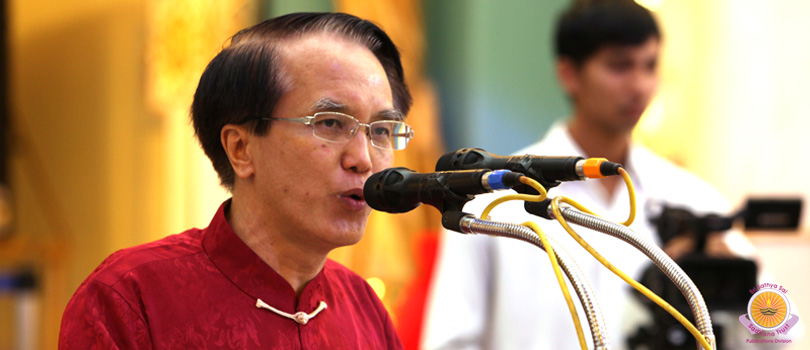
Holy Tibetan chantings continued before Mr Billy Fong from Malaysia took over speaking on the significance of Chinese culture and tradition, stressing on Filial Piety. Speaking on the theme, recalling quotes from Confucius, he invited the Regional Chair of SSSSO Dr Ravindran to release a compilation of teachings of Bhagawan on the theme Filial Piety at Bhagawan’s Lotus Feet.
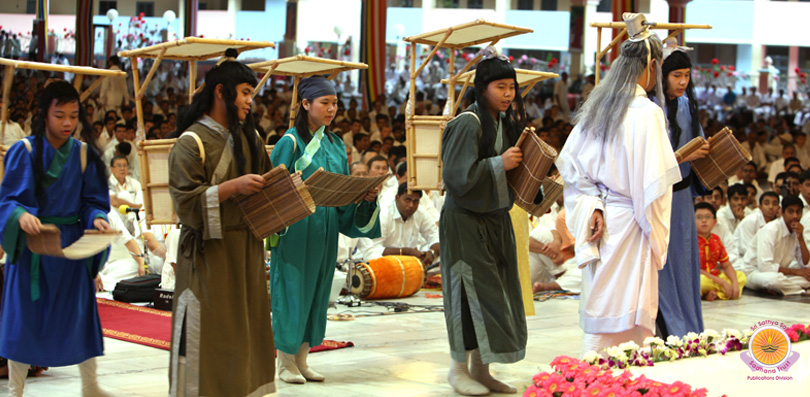
A burst of songs in Mandarin Chinese and English followed that ended with a combined Mandarin – English piece on the joy and bliss of the advent of Happy New Year.
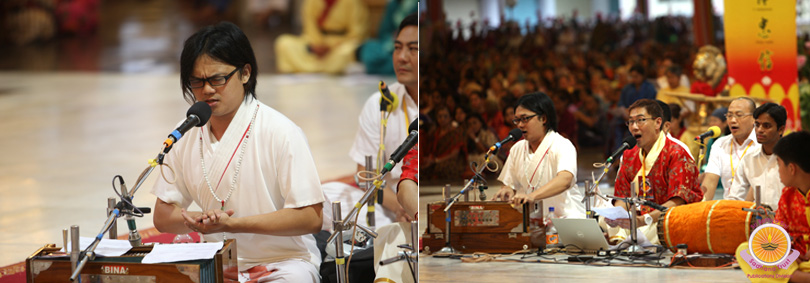
A surprise item was to follow, a Carnatic rendering by one of the Chinese speaking youth who was trained by Padmabhushan Dr BK Pattammal. Singing “Rama Ninnu Namina…”, , the young singer rose to the expectations of the capacity audience receiving rounds of applause.
Even as participants were felicitated bhajans continued and ended with Mangala Arathi at 1830 hrs. The 2- day Chinese New Year celebrations would continue tomorrow. II Samastha Lokah Sukhino Bhavnatu II
|
||
|
Archive 2012
|
||
|
Chinese New Year in Prasanthi Nilayam
Monday, January 30th, 2012 |
||
 |
||
|
Text & photo source - copyrights: Sri Sathya Sai Sadhana Trust - sssbpt.org - Radiosai.org Prasanthi Diary - theprasanthireporter.org | Web layout - Photo graphic design : saibabaofindia.com "SBOI" | Sri Sathya Sai Sadhana Trust & Sri Sathya Sai Media Foundation - We gratefully acknowledge the publishers |
||
|
|
||
 |
||
Holy Buddhist Chants…Monday, January 23rd, 2012 |
||
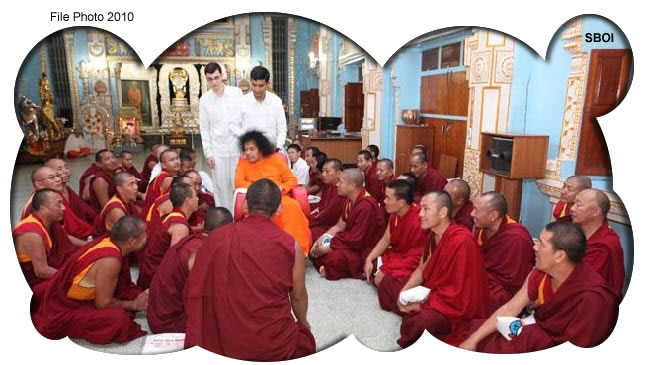
Celebrating the commencement of 4012th Lunar Chinese New Year, 36 High Lamas of Tibetan Order from Sera Jhe Monastery in Mysore joined by hundreds of devotees from various countries, including westerners, presented a Buddhist devotional evening today here in Prasanthi Nilayam. The proceeding for the evening began with initial offerings by Capt. Ong and family, organisers of the day’s presentation. This was followed by offering of Tibetan Khatas by the High Lamas, amuletes and Naivedyam by devotees from Singapore.
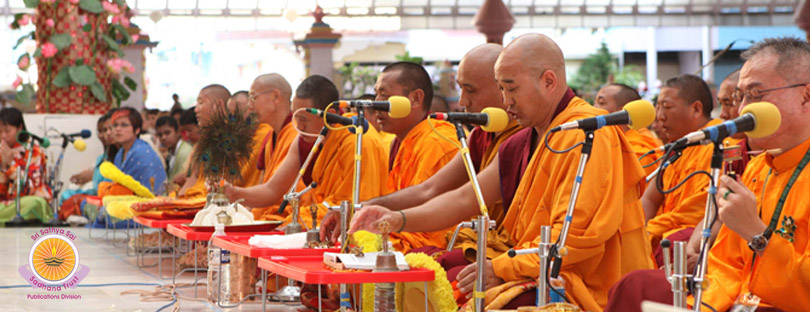
Purificatory rites continued next, in the backdrop of Buddhist chantings followed group chantings af Buddhist verses and Mantras by from holy scriptures coupled with rites by High Lamas.
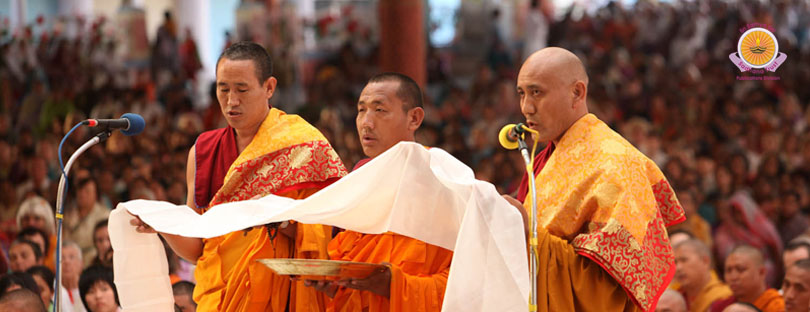
The second part of the programme commenced with the chanting of various Buddhist Mantras, namely, Om Mani Padme Hung, Medicine Buddha Mantra, Green Tara Mantra, Special Eternal Prayers composed on Bhagawan, Bodhisattva Ksitigarbha Mantra, Mantra of the Heart of The Perfection of Transcendent Wisdom, The Long Dharani of Chenrezig, Gayathri Mantra followed by another round of Om Mani Padme Hung to concluded with a recital of dedication of Tibetan Buddhist Chants For Universal Peace 2012. Man of the ceremonies Sai Keet elaborated the significance of the Mantras, Rites and other proceedings. The whole programme lasted for an hour and forty minutes.
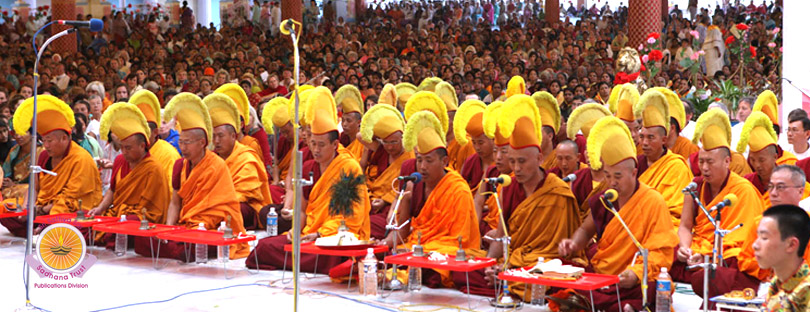
Even as bhajans continued, prasadam went for distribution. All the 36 High Lamas were felicitated with special presentations. Mangala Arathi was offered after 1900 hrs.
|