Events & Festivals calendar
Home | SBOI-Group| Pictures | Audio-Video | Wallpapers| Greeting-cards | Ashrams Info.
| January | February | March | April |
May |
June | July | August |
September |
October | November | December |
Daily Sai news Ashram-info |
|||
|
Click on month
above to read the event details, discourse etc.
Given below are the main
festivals events days and important happenings.
However, there are other
events and festivals that
are celebrated in Sai Baba's presence to check out those
events etc kindly click on Daily Sai News also check Sai
News archive to find more about previous events. * Note: Festival dates given below are only indicative and are subject to change. Events Calendar 2006* Archive: 2004 - 2005 - 2007 - 2008
|
|||
|
January February March April May June July August September October November December
Events Calendar 2006* Archive: 2004 2005
* Note: Dates given above are only indicative and are subject to change. Introduction New Year The dawn of the New Year on January 1st is observed every year in Prasanthi Nilayam by thousands of devotees. Multitudes throng Prasanthi Nilayam to spend the New Year day in a sacred manner in the Divine presence. On this day, Bhagawan reminds every individual that every day, every moment, a new year is born and every moment needs to be sanctified with noble thoughts, words and actions. He exhorts everyone who comes to Prasanthi Nilayam to take home the love and happiness experienced here and share it with everyone. Excerpts from
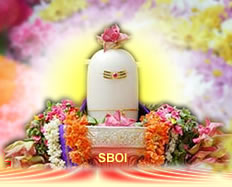
Bhagawan’s Discourses: - Divine Discourse: 1st January 2001 “The year becomes new, the day become holy, when you sanctify it by spiritual practices (sadhana), not otherwise. Sadhana can grow only in a field fertilized by Love. Love (prema) is the sine qua non of devotion (bhakthi). The love you now have toward material objects, name, fame, wife, children, etc. should be sanctified by being subsumed by the more overpowering Love of God. Let your tiny drops of love for things material merge with the stream of love for God and be elevated. Have the love of God filling and thrilling your heart; then you cannot hate anyone, you cannot indulge in unhealthy rivalries, you will not find fault with anyone. Life becomes soft, sweet and smooth”. - Divine Discourse: 1st January 1967 “On this New Year Day, you should resolve to start every day with love, spend the day with love, fill the day with love, and end the day with love. There should be no difference of caste, creed, color, religion, or nationality. Love knows no distinction of any kind. You must wish everyone to be happy. Fill the heart with love. The country will prosper and the world will prosper and everyone will be happy. Cultivate good thoughts, speak good words, and do good deeds with the broad view that everyone in the world should be happy. Give up your evil thoughts and evil qualities, since they are the cause for all sufferings in the world”. - Divine Discourse: 1st January 1994 Annual Sportsmeet The inaugural function of the Annual Sports and Cultural Meet of the Sri Sathya Sai Educational Institutions is held every year on the 11th of January in the Sri Sathya Sai Hill View Stadium. Bhagawan has always emphasized that active sports and upholding of the Indian Culture are essential parts of an Integral System of Education in Human Values. On this day every year, the Primary School, the Sri Sathya Sai Higher Secondary School and the three University campuses of Anantapur, Brindavan and Prasanthi Nilayam come together for an exhibition of events demonstrating a high degree of perfection, co-ordination and skill. The Meet is inaugurated by Baba lighting the Sports meet torch followed by March Past by the students of all campuses, extraordinary feats of adventure, colourful and artistic group performances and well coordinated, rhythmic group drills. The various cultural, sports and games competitions in the campuses culminate in the Valedictory and Prize Distribution Function which coincides with the Makara Sankranthi day on 14th January in the Divine Presence. Makara Sankraanti This festival falls on the 14th of January. On this day, the sun enters the house of Capricorn (or Makara as it is known in the Hindu Almanac), so it is known as Makara Sankranthi. It marks the commencement of the sun's journey to the Northern Hemisphere and is considered to be of great spiritual significance in the scriptures. It is also the time when farmers rejoice after the toils of the year result in a bountiful harvest in the fields, and is celebrated all over the country. Indeed, the harvest festival is common to many cultures all over the world and is an occasion of joyful celebration and warm conviviality. In Prasanthi Nilayam, the festival coincides with the valedictory function of the Annual Sports and Cultural Meet of Bhagawan’s educational institutions, when the prizewinners of the various events and competitions held during the year are felicitated. Excerpts from Bhagawan’s Discourses: “Makara Sankranthi marks the movement of the Sun from the southern horizon to the northern horizon. This northward movement of the Sun has immense spiritual significance. The north is symbolised by Himaachala. Hima means snow. It is pure, untainted and soothingly cool. All these endow it with the quality of Prashanthi (perfect peace). Achala means that which is steady and unshakeable. Himaachala does not refer to the physical Himalayan mountains. It represents that which is cool, peaceful and steady. From this day the Sun is said to move towards such a state. The Sun symbolises the vision of man. The northward movement of the Sun is a call to human beings to turn their vision towards that which is cool, peaceful and unchanging, i.e. towards the divinity within. - Divine Discourse: 14 January, 1994 “Sankranthi day marks the arrival in the farmers' houses of the grains that are the fruit of their labors. It is also a cherished day of rest after a period of hard work when they can enjoy peace of mind. "Samyak kranthi iti Sankraanthi." Sankraanthi confers peace and heralds a welcome change. It brings out the inner joy in people. It effects a change in life-style. It generates sacred thoughts”. - Divine Discourse: January 14, 1997 Pray wholeheartedly for the welfare of humanity - Loka Samastha Sukhino Bhavantu (May all the people of the world be happy). You can be happy only when the world is happy. There is an intimate and inseparable relationship between you and the world. Chant the Divine Name. Pray for the welfare of the world and participate in service activities”. - Divine discourse: January 14, 2002 “The Sankranthi festival should be regarded as the day on which man turns his vision toward God. Man's life may be compared to a stalk of sugar cane. Like the cane, which is hard and has many knots, life is full of difficulties. But these difficulties have to be overcome to enjoy the bliss of the Divine, just as the sugar cane has to be crushed and its juice converted into jaggery to enjoy the permanent sweetness of jaggery. Enduring bliss can be obtained only by overcoming trials and tribulations. Gold cannot be made into an attractive jewel without subjecting to the process of melting in a crucible and beating it into the required shape”. - Divine Discourse: January 15, 1992 Maha Shivarathri The festival of Maha Shivarathri is one of the most important festivals in India. It falls on the 14th day of the (Krishna Paksha) dark fortnight of the Magha month of the Hindu calendar. The very word ‘Shivarathri’ means auspicious night. All over the country, people throng Shiva temples and spend the night in worship and contemplation of the Divine. According to Hindu belief, the moon is the presiding deity of the mind and the 16 phases of the moon represent the 16 aspects of the mind. On Shivarathri, which falls a day prior to the new moon, only a streak of the moon is visible. This is symbolic of the waning influence of the mind, when 15 aspects have already merged in the Self and only one aspect remains. Hence on this day, it is easier to control the mind and direct it towards God. Therefore, the night is spent in contemplation and adoration of God, so that the vagaries of the mind can be totally subdued and transcended to attain realization of the Atman. Maha Shivarathri is generally celebrated by performing Akhanda Bhajana (continuous devotional singing) throughout the night. Shivarathri, as a festival has gained a lot of importance in Prasanthi Nilayam because it is during this festival that Baba, the supreme Iswara (Godhead), chooses to reveal His divinity. Baba, out of His infinite love for humanity, materializes lingas (an oval shaped object which is the fittest symbol of divinity) in the Shivarathri evening from within His being. This emergence of the Linga is called ‘Lingodbhavam’. Baba has explained, “The Linga is just a symbol, a sign, an illustration, of the beginningless, the endless, the limitless - for it has no limbs, no face, no feet, no front or back, no beginning or end. Its shape is like the picture one imagines the Niraakaara (Formless) to be. In fact, linga means - leeyathe (that in which all forms and names merge) and gamyathe (that towards which all names and forms are proceeding, to attain fulfillment). It is the fittest symbol of the All-pervasive, the All-knowing, the All-powerful”. Excerpts from Bhagawan’s Discourses: “Today we are celebrating Shivarathri. ‘Shivarathri’ means "Auspicious night". At least on this day, one should chant Shiva's name all through the night. At least on one day in a year, chant the Lord's name. This night, devotees are expected to stay awake by chanting the sacred name of Shiva. Keeping awake in any other way is purposeless. Spending the night reciting the Lord's name sanctifies one's life”. - Divine Discourse: February 25, 1998 “The lesson of Shivarathri is that devotees should foster good and sacred thoughts. They should be filled with godly thoughts. They should seek to become one with the Divine by reflecting on their inherent divinity. If you constantly chant the name of God, God realization will come in due course. Whatever other things they may possess, men suffer from lack of peace and bliss. These two can be obtained only from God. It is for these two that men should pray to God and not for anything else, because God alone can give them. When these are secured, all other things will come of their own accord by the grace of God. People should yearn for God. All other desires are worthless”. - Divine Discourse: February 26, 1998
Ugadi According to the Hindu Calendar, Ugadi is celebrated on the first day of the bright fortnight ('Shukla Paksha') of the first month ('Chaitra') in the first season of the year i.e., spring ('Vasanta'). This day is celebrated as the New Year Day in the states of Andhra Pradesh, Karnataka and Maharashtra. While it is called Ugadi or Yugadi in Andhra Pradesh and Karnataka, it is celebrated as Gudi Padva in Maharashtra. The word ‘Ugadi’ is derived from the Sanskrit word ‘Yugadi’, which means ‘beginning of a new Yuga or era’. Legend has it that this was the day on which Lord Krishna shed His body, signalling the end of the Dwapara Yuga and the commencement of the Kali Yuga. It is also believed that Brahma created the universe on this day. On Ugadi, it is the tradition to begin the day by partaking of a special preparation known as ‘Ugadi Pacchadi’. Six ingredients go into the making of this dish, each one representative of the six tastes – sweet, sour, spicy, salty, savoury and bitter. This reminds us to accept both the joys and sorrows that life offers us with equal mindedness. Excerpts from Bhagawan’s Discourses: “There is no need to wait for a new year to bring new tidings. Every moment is new. Many are wondering what troubles and losses the New Year will bring. But the year is not responsible for all our troubles and difficulties. Only our conduct is responsible. If our actions are good, the results will be good. Bad actions lead to bad consequences. People think that good and bad are related to time. It is not that way. Their thoughts are the cause. Hence, they should develop good thoughts and do good deeds. They should cherish good feelings and associate with good people. People should realize the preciousness of Time. People waste most of the time available. This is utterly wrong. Time should be used always for right purposes. That is the foremost duty of every man. Waste of time is waste of life. The Lord of Time protects those who take refuge in Him, even against the Lord of Death, Kala. Time takes its revenge on those who misuse it. A nation's prosperity is dependent on how people use their time in the performance of good actions”. - Divine Discourse: 7 April 1997 “Today is Ugadi, the beginning of the New Year. Since ancient times, man has celebrated many Ugadis, but he is yet to give up bad qualities. True Ugadi is the day when man gives up bad qualities, fills his heart with love and takes to the path of sacrifice. Do not limit the celebration of Ugadi to merely putting on new clothes and partaking of delicious items. Today you may wear a new shirt, but how long will it remain new. Tomorrow it becomes old. Nobody reads the same newspaper everyday. Today's newspaper becomes a waste paper tomorrow. Our life is like a newspaper. Once you have finished reading a newspaper, you do not like to read it again and again. You have been given this birth which is like a newspaper, and have gone through varied experiences of pleasure and pain. Enough is enough. Do not ask for one more newspaper, i.e., another birth. You should pray, "Oh God! You have given me this 'newspaper' and I have gone through the experiences of this life. I don't want to have another birth. On this day of Ugadi, take a firm resolve to purify your heart. Past is past. It cannot be retrieved. When you are walking on the road, you should look at the path ahead of you. What is the point in looking behind? Likewise, there is no point in brooding over the past. Future is not certain. What is the guarantee that you will be alive until tomorrow? So, do not worry about your future. Live in the present. It is not ordinary present. It is omnipresent, meaning the results of past as well as the future are contained in it. So, when you make proper use of the present, you can be rest assured that your future is safe and secure”. - Divine Discourse: April 13, 2002 “We will achieve victory in every walk of life when we foster good thoughts and good deeds. Today is the first day of the New year. From today onwards, all devotees must undertake his holy task. Past is past. Do not think of the future, because it is not in our hands. What is the guarantee that we will live until tomorrow? Therefore, this present time is very important. Make good use of it. Do not go against your inner self. That is what I tell my children, the students here, "Follow the master". Who is your master? Your inner self is your master. So there is no need for anyone else; follow your own inner self. That is your God. That is your happiness. That is your wealth. That is your peace. Happiness and peace are not outside”. - Divine Discourse: 20 March 1996 Sri Rama Navami Sri Rama Navami is the festival that celebrates the birth of Lord Sri Rama, the Avatar of the Treta age. It falls in the ‘Chaitra’ month in the Shukla Paksha Navami (ninth day of the bright fortnight) of the Hindu lunar calendar. Lord Rama is revered as being the very embodiment of Dharma (righteousness) and one whose life serves as an ideal for all mankind. The Ramayana, an epic poem composed by sage Valmiki on the life of Lord Rama, is one of the sacred scriptures of the Hindu religion. “The Ramayana, the story of Lord Rama, teaches two lessons: the value of detachment and the need to become aware of the Divine in every being. Faith in God and detachment from objective pursuits are the keys for human liberation. Give up attachment to sense objects, and you gain Rama. Sita gave up the luxuries of Ayodhya so she could be with Rama during His exile. When she cast longing eyes on the golden deer and craved for it, she lost Rama's proximity. Renunciation leads to joy; attachment brings about grief. Be in the world, but not of it. Rama is the in-dweller in every body. He is the Source of Bliss (Atma-Rama) in every individual. His blessing, surging from that inner spring, confers peace and bliss. He is the very embodiment of Dharma, of all the codes of morality that hold mankind together in love and unity”. - From ‘Ramakatha Rasavahini’ authored by Bhagawan Baba. Excerpts from Bhagawan’s Discourses: “The Ramayana teaches the principles of Dharma and the path of duty to every individual. Though ages and aeons have passed by, the Ramayana remains ever-fresh guiding humanity on the path of truth and righteousness. Even today we think of the characters of Ramayana with respect and reverence. You can very well understand its greatness. There is no morality higher than what is depicted in the Ramayana. The Ramayana should be the subject of our Parayana (worship). You should install the principle of Rama in your heart and experience bliss. Practise the teachings of Ramayana in your daily life. Obey the command of Lord Rama. It is to understand and assimilate the principle of Ramayana that we are celebrating the festival of Rama Navami today. It is not enough if the celebration is confined to merely partaking of sweet pudding and other delicious items. - Divine Discourse: April 11th, 2003 “From time immemorial, every individual in Bharat (India) has regarded Sri Rama's life as an ideal and has sought to sanctify every moment of his life by living up to it. Sri Rama incarnated as a human being to promote peace and happiness in the world. "Rama is the very embodiment of righteousness (Ramo Vigrahavaan Dharmah)." It was as if righteousness itself had incarnated on earth. Dharma and Rama are inseparable. We must learn to chant the sweet name of Rama with a pure, unsullied heart, in a spirit of selfless devotion. Men should learn to speak sweetly and pleasingly. Sweet speech confers peace. It is the means to self-realization. Sri Rama loves to dwell in the heart of the man who speaks sweetly. Wholehearted chanting of the name of Rama even once can destroy mountains of sins. But the chanting should not be done mechanically, like a gramophone record. It should emanate from the depths of the heart. You must seek to redeem your lives, by living up to Rama's ideals and proclaiming them to the world. Remember the name of Rama with love. God can be realized only through love and by no other means”. - Divine Discourse: 14 April 1989 The New Year Day of the Tamilians (people belonging to the South Indian state of Tamil Nadu) usually falls on the 14th or 15th of April every year. Devotees from Tamil Nadu gather in thousands in the Divine Presence to begin their New Year with Divine Darshan and benediction. They also place a bouquet of cultural programmes at His Lotus Feet. Excerpts from Bhagawan’s Discourses: “Today, you are celebrating the commencement of the New Year. But, in fact you should treat every second as the beginning of a New Year. Many people are worried as to what changes would the New Year bring in the social, political and economic fields. Any change if it were to take place will not wait for the arrival of the New Year. In fact, many changes are taking place from moment to moment. One need not be concerned about these things. You should be concerned that there is no transformation in your heart though years are rolling by. You have to get rid of evil tendencies in your thoughts, words and deeds. You should celebrate the arrival of New Year with noble and divine feelings. You should experience bliss by visualising the non-apparent Atmic Principle in this apparent world”. - Divine Discourse: 14th April 2002 “Embodiments of Love! New Year does not bring new principles of truth and righteousness. They are changeless and eternal. When they are practised, the whole world will be taken care of. Hence, we have to always keep in mind these two principles. For man, truth and righteousness are his two eyes. In fact, they are his very life principles. He may undertake any activity, he may do any job or business, but he should make truth and righteousness as the undercurrent of all his endeavours. Man has to take to a newer path. Years have rolled by, but man has not given up his old and mean feelings. He has to purify his heart. Humanness will blossom only when there is transformation of the heart. Merely putting on new clothes is not enough; man has to change his character and behaviour. His conduct should be based on truth and righteousness. He has to understand the principle of Transcendental Truth. It is present in everyone. In fact, man is not a mere mortal, he is God. The Vedas say, Raso Vai Sah (God pervades everything in the form of essence). God moves about in the form of Rasa (essence) in every limb and every cell and protects the body. Hence, He is known as Angirasa.” - Divine Discourse: 14th April, 2003 Vishu is the New Year’s Day of the Keralites (people from the South Indian state of Kerala), which usually falls around 14th or 15th of April every year. This being a very sacred day for the Keralites, thousands of Malayalam-speaking devotees converge at the lotus feet to immerse themselves in the bliss of His Divine Presence. Traditionally, Keralites celebrate this festival with the most auspicious sight or ‘Kani’ at the most auspicious time on the morning of the festival day. In the past few years, the Sathya Sai Seva Organisation, Kerala has been organizing a ‘Sadhana Camp’ (Spiritual Retreat) in the Divine Presence where thousands of youth from all over the state of Kerala gather at the Divine Lotus Feet and Bhagawan profusely blessed the Youth with Divine Discourses and benediction. Excerpts from Bhagawan’s Discourses: “Today marks the commencement of the New Year - Vishu. Many such New Years have gone by. Man expects the New Year to confer on him and the world, peace, happiness and prosperity. But the welfare of the world depends on man's conduct and behaviour. Man's conduct depends on his mind. The nature of the mind depends on thoughts. Only when man's thoughts are based on truth will the world flourish. One who aspires for the welfare of the world should see to it that his thoughts and actions are in accordance with his aspirations. Good and evil, happiness and misery, merit and sin depend on man's actions. As is the action, so is the result. But today man ignores the law of action and acts as he pleases. It is easy to indulge in sinful deeds but it is extremely difficult to bear the bad results they yield. Embodiments of Love! Respect and be respected. What you give to others will come back to you. You are bound to face the reflection, reaction and resound of your actions. Everything, including God-realisation, depends on your actions. Today the New Year has commenced, but it has not brought anything new with it. Today is in no way different from yesterday. If you do good acts now, you will reap its benefit in future. So, sanctify your actions”. - Divine Discourse: April 14, 2001 Eswaramma Day May 6th every year, is celebrated as Easwaramma Day, commemorating the anniversary of the passing away of the saintly lady who was blessed to be mother to the Avatar of the Kali age. Bhagawan exhorts His devotees, especially children, to revere the mother as God. Hence, this day is a celebration of the sacred ideal of Motherhood. Easwaramma was very fond of children and was one of the pioneers of the Bal Vikas movement. Hence, this day is also celebrated as Bal Vikas Day when hundreds of Bal Vikas gather in Bhagawan’s presence to present before Him their cultural programmes and imbibe the highest spiritual lessons from their Divine Mother. Narayana Seva (feeding of the poor) is also undertaken on this day. Excerpts from Bhagawan’s Discourses: “Easwaramma breathed her last in this very Mandir. Summer classes were going on in May 1972. She used to come and sit in these classes. Swami used to be amused at her presence and asked her what she followed in these classes. She used to say, "I am not interested in these studies. I come here to see how the students of Swami conduct themselves, how they obey His commands and how they react to Swami's advice and teachings." The parents take great pains in bringing up their children with expectation that they may lead a respectable life. Are the children behaving in accordance with the expectations of their parents? They wear new clothes provided to them by their parents, but do they spare any thought for the hardships their parents undergo to procure these clothes? All of you who have gathered here have to take a pledge today. Live a good life. Be ready to help others. Love children, respect elders, respect all according to their status in society. Living up to these ideals is the best way to lead one’s life. Imprint these principles firmly on your heart. Act in a manner so as to please your parents. Only then will your life find fulfillment. You are conducting Bhajans at various places and at different times. But mere singing of Bhajans is not enough, behaviour and conduct are also important”. - Divine Discourse at Brindavan: May 6th, 2002 “He is a true human being who loves his mother and becomes the recipient of his mother's love. One who cannot earn his mother's love is verily a demon. Hence, respect and revere you mother. Experience and enjoy your mother's love. Dedicate your life for the happiness of the mother. You may acquire any number of degrees, you may undertake any number of sacred activities, but all of them will prove futile if you do not please your mother. There is none superior to the mother in this world. The Vedas accord the highest prominence to the mother by declaring ‘Matru Devo Bhava, Pitru Devo Bhava, Acharya Devo Bhava, Atithi Devo Bhava’ (Revere your mother, father, preceptor and guest as God). There may be a son in this world who does not love his mother, but there cannot be a mother who does not love her son. There may be differences of opinion between them, but a mother’s love will never diminish. It is your foremost duty to love your mother. As soon as you wake up in the morning, the first thing you should do is to touch your mother's feet and offer your salutations. Such a noble practice will protect you always and bestow on you all types of wealth. You are going to be fathers and mothers in future. You will be loved and respected by your children only when you love and respect your parents now. You are bound to face the reaction, resound and reflection of your actions. When you respect your parents, there will be rich rewards for you in the future”. - Divine Discourse: May 6th, 2003 Buddha Poornima The day of Vaisakh Purnima, which usually falls in the month of May, is considered most sacred by Buddhists all over the world. This day is significant for three reasons. It was on this day that Gautama Buddha, the founder of Buddhism, was born as Prince Siddhartha at Lumbini in Nepal in 560 B.C. It is also the day when He attained enlightenment at Gaya in India, after years of search and enquiry into the causes and remedy for sorrow in the world. Thereafter, Siddhartha came to be known as Buddha, or the Enlightened one. He preached that desires are at the root of all sorrow and hence advocated the path of right conduct and the right use of senses as the way to enlightenment. He attained Nirvana (Unity with the Absolute) in 480 B.C., again on the day of Vaisakh Purnima. This auspicious day is observed as Buddha Purnima with reverence and piety by believers in the Far East countries and in Sri Lanka and India as well. The Mandir is attractively decorated in the artistic traditions of the Orient. In the morning, special dance troupes from these countries perform invocatory dance programme welcoming Bhagawan. Bhagawan is generally greeted with the famous Buddhist prayer: ‘Bhuddham Sharanam Gachchami’ (I take refuge in Buddha). The programme usually features speeches by Buddhist devotees and dignitaries and a variety of other presentations depicting the rich cultural traditions of those lands. Excerpts from Bhagawan’s Discourses: “Siddhartha, who came to be known as Gautama Buddha, undertook various spiritual practices in order to realize his true Self. He studied the Vedas and sacred texts. He met many elderly wise men and tried to know the truth from them. But none of these practices could show him the path to Nirvana. Ultimately, he realized that Nirvana lies in making use of the five senses of speech, touch, vision, taste and smell in a sacred manner. He understood that Japa, Dhyana, Yoga, Yajna, etc. were mere physical activities. These spiritual practices are needed only for those who are attached to the body. One who abides in the Self need not undertake any of these practices. Buddha taught that Nirvana can be attained only by cultivating Samyak Drishti (sacred vision), Samyak Vaak (sacred speech), Samyak Shravanam (sacred listening), Samyak Bhavam (sacred feeling) and Samyak Kriya (sacred action). Today man is polluting his mind because of his evil vision. Once the mind is polluted, how can he expect to attain Nirvana? So, first of all he should develop sacred vision. See no evil, see what is good. Man is subjected to hardships because of his unsacred vision. Evil vision is sure to lead to sinful acts. In fact, it destroys his humanness itself… What is Nirvana? Today man aspires to attain Mukthi (liberation). What is Mukthi? It is not the attainment of a heavenly abode. Mukthi means freedom from suffering. You need to have Mukthi at three levels – body, mind and soul. For example, you are hungry. When you eat food, your hunger is satiated. This is a kind of Mukthi. Say, you are suffering from a disease. You take medicine and get cured. This is also Mukthi. All this is related to the body. At the mental level, Mukthi means controlling the vagaries of the mind. But true liberation lies in understanding the principle of the Atma which neither comes nor goes. This is termed as Nirvana. One should have Daiva Preethi, Papa Bheethi and Sangha Neethi (Love for God, fear of sin and morality in society). That is true Nirvana. Be away from sin. Understand that Daiva Sannidhi (proximity to the Divine) is true Pennidhi (wealth). But ignorant people are unable to understand the Divine principle. They feel that they can experience God through meditation. What is meditation? It is a way of life. While you are walking on the road or driving a car, if your vision is not focused on the road, you may meet with an accident. Concentration is necessary in all aspects of life. But concentration does not become meditation. One should go beyond concentration which means the mind should become still. You should be free from thoughts. That is true meditation”. - Divine Discourse: May 7, 2001 Ashadi Ekadasi In the Hindu lunar calendar, Ekadashi is the eleventh day of the fortnight after a new moon or a full moon, and is considered auspicious for the worship of Lord Vishnu. The Ekadashi after the new moon in the Hindu month of Ashada is of special significance to the devotees of Lord Vitthal, a manifestation of Lord Vishnu. Tradition has it that two of the greatest devotees of the Lord from the state of Maharashtra, Sant Jnaneshwar and Sant Tukaram had set out on a pilgrimage from their respective places to the shrine of Lord Vitthala in Pandharpur and reached the Divine Abode in fifteen days time on this auspicious day of Ashadi Ekadashi. Following the tradition set by these great souls, devotees from the entire length and breadth of Maharashtra, set out for Pandharpur (the abode of Lord Vitthala), wearing basil beads and singing His glory on a pilgrimage to reach there in the stipulated period of fifteen days on this auspicious day to have Divine Darshan. These devotees are known as Varkaris and the pilgrimage is traditionally called Dindi Yatra. In recent times, the holy festival of ‘Ashadi Ekadashi’ has seen multitudes from the states of Maharashtra and Goa make the pilgrimage to Prasanthi Nilayam to celebrate this important festival in the Divine Presence. Devotees from the states of Maharashtra and Goa commence their Dindi Yatra from the town of Dharmavaram (about 40 kilometres from Puttaparthy) on foot and reach Prasanthi Nilayam, on the morning of Ashadi Ekadashi to have the Darshan and blessings of Bhagawan. This is usually followed by a cultural programme presented by the Bal Vikas children of Maharashtra and Goa. Guru Poornima Guru Poornima is the full moon day in the month of ‘Ashada’, the fourth month in the Indian lunar calendar, corresponding to end of June or early July. It is also called ‘Vyasa Poornima’, as this full moon day marks the birthday of the great sage Veda Vyasa, who categorized the vast body of Vedic knowledge in to the four Vedas – Rig, Yajur, Sama and Atharva. Even the writing of the eighteen Puranas (ancient Hindu legends) was completed by him on this day. On this day, we express our love, reverence and gratitude to our teachers and the great sages of yore for the precious gift of wisdom that we have received from them in the form of the scriptures. In Prasanthi Nilayam, Guru Poornima is celebrated in a very grand manner in the presence of the teacher of teachers – our beloved Bhagawan. Excerpts from
Bhagawan’s Discourses: - Discourse: 20th July, 1997 Sri Krishna Janmashtami Sri Krishna Janmashtami, the birthday of Lord Sri Krishna, the Avatar of the Dwapara Yuga (era), usually falls in late August or in early September or in the Indian lunar month of Shravana. Bhagawan has declared that Lord Krishna’s advent took place at 3 a.m. on 20th July, 3228 B.C, the Ashtami Day (eighth day after full moon) under the star ‘Rohini’ in the dark fortnight (Krishna Paksha) of Shravana Masa in the year named ‘Srimukha’. Janmashtami (also called Gokulashtami) is a very colourful and joyous celebration in Prasanthi Nilayam. The Mandir transforms itself into another ‘Brindavan’ of the times of Lord Sri Krishna when as a child He frolicked in the company of His cowherd friends. The gleaming cows of Sathya Sai Gokulam (Dairy), ornately caparisoned and wearing kumkum (Vermillion), tinkling bells, flowers, etc. are brought to the Mandir in a grand procession by the students of the Institute and the School who are dressed up as cowherd boys. Elegantly decorated ‘Sai Geeta’, Baba’s pet elephant, leads this colourful procession. Swami then spends time with each of these cows and Sai Geeta, feeding, caressing and blessing them all. Excerpts from Bhagawan’s Discourses: “The incarnation of Krishna proclaimed the doctrine of divine love, as manifested by the cowherd maids (gopikas). Man is like an earthen pot filled with nectar. His body may be made of clay, but his spirit is eternal. The Divine has to be experienced through the body. Hence, human birth should not be treated as something trivial. Human life is worth living; it should be cherished as something precious. But today, such a precious gift is being treated as dirt. It is essential to realise the value of human existence. What is the goal of human life? It is to go back to the source from which we came. Our duty is to return to our primordial source. You have come from the Atma. You have to go back to the Atma. You have come from the Brahman (Supreme Self). You have to merge in the Brahman. You have incarnated as a spark of Brahman. You have to become the Brahman. That is the ideal. That is the goal. In between, there may be many impediments. You should ignore them. Have unshakable faith. That is true devotion”. - Divine Discourse: 18th August, 1995 "The word (Krishna) has three meanings: (1) "Krushathi-ithi Krishna” that is, “The One who ploughs is called Krishna." The field here symbolizes the heart. The heart should be cleared of weeds (evil qualities). It should be filled with love. The seeds of the Lord's name should be sown in it. Krishna is the one who inspires the devotee to do all this. (2) "Karshathi-ithi Krishna” that is, “The One who attracts is called Krishna." Krishna has the supreme power of attraction. By His words, His sport, His music and all His actions, He attracts all people. This power of Divine attraction is present in everyone. Hence, everyone is potentially Krishna. (3) "Kushyathi-ithi Krishna” that is, “The One who imparts bliss is called Krishna." Everyone seeks happiness. The Divine, who is the embodiment of happiness, is in you. God wants you to be happy, but you do not realize it. Try to recognize the source of bliss within you. It is not the true nature of man to be unhappy. When anyone is sad, people around him are concerned about him. You should always be happy, because you are the embodiment of the Atma. Never give way to worry. - Divine Discourse: 25th August 1997 Onam Onam, the foremost cultural festival of the South Indian state of Kerala, falls towards the end of August or in early September every year. The Onam festivities at Prasanthi Nilayam have a unique charm of their own. The entire Sai Family from the state of Kerala gathers at Prasanthi Nilayam to celebrate the festival in the presence of their Divine Master, Bhagawan Sri Sathya Sai Baba. The sacred day marks the occasion when the mighty Emperor Bali performed the supreme act of surrender to Lord Vamana, the Avatar of Lord Vishnu. The legend goes that Lord Vamana, disguised as a Brahmin, asked Bali for just three paces of land. His first two paces covered the earth and the heavens. And Bali, who would never go back on his word, offered his own head for the Lord to place His Feet on, and thus attained liberation. However, he prayed to Vamana for one last boon – once every year Emperor Bali wished to see his beloved subjects. This day, when Emperor Mahabali comes to visit his people, is celebrated as Onam by the people of Kerala. The state of Kerala is home to varied and captivating forms of art, music and dances. So, when the people of Kerala gather at the Lotus Feet of Bhagawan on the occasion of Onam, it is indeed a grand cultural feast. Sai Kulwant Hall reverberates to the sound of the Panchavadyam, the traditional music that is played on festive occasions in the temples of Kerala. Reputed singers from Kerala enthrall the audience with their expert renditions of Carnatic musical compositions. The students of the Sri Sathya Sai Vidyapeetham at Srisailam in Kerala usually present a cultural programme on this occasion. Excerpts from Bhagawan’s Discourses: “This day is the sacred day when the Lord as Vamana Avatar conferred liberation on Emperor Bali. Bali was a great person, but he had one weakness. He suffered from a slight sense of ego. A great man sees the human even in Lord Narayana (God). But a good man is one who sees God even in man. Hence, it is more important for people to be good rather than great. Most parents these days want their children to become great in various ways - in scholarship, wealth, and position. This is totally misconceived. They should really want their children to be good. Vamana incarnated to eradicate the undesirable quality of ego in Emperor Bali, Bali was known for his love of his subjects. Poverty was unknown in his realm. He looked after the welfare of his people with an equal eye. He felt proud about his kingdom and his people. Vamana wanted to efface even this pride and redeem Bali. Before leaving for the nether world, Bali gave a promise to his people, whom he loved. He said he would come back to them every year on Onam day and bless them. Onam is celebrated as the day of advent of Vamana and Bali. It marks the beginning of a new life. That is why it is celebrated by wearing new clothes and resolving to lead a new life”. - Divine Discourse: 14th September 1997 "When the Lord, as Vamana, was approaching Emperor Bali's sacrificial ceremony, the Emperor received him reverentially and asked him what he wanted. He said, "I want three feet of ground measured by my feet." Bali said, "Why come all the way to ask for just three feet of ground?" Vamana declared, "That is all I want." The Emperor's preceptor, Sukracharya, warned the Emperor against making the gift, since the seeker was no ordinary person. But the Emperor firmly declared that there is no greater sin than going back on one's promise. He kept his word. Emperor Bali stands forth as a sterling example of one who stands by his word whatever the circumstances. That is why the people of Kerala worship him to this day and celebrate the festival of Onam in his memory. What is it that is adored today? It is the virtue of truth. Without truth nothing has any value. Love is the supreme value. It is not worldly love but Divine love that is precious. That Divine love encompasses every other form of attachment to friends and others. Cultivate the enduring friendship of God. Emperor Bali was prepared to offer everything, including himself, to God. That is his greatness. It is not the gift of mere three feet of land. He offered himself to the Lord. This is the spirit in which Bali surrendered to the Lord”. - Divine Discourse: 27 August 1996 Ganesha Chaturthi Ganesha Chaturthi is celebrated on the Chaturthi, i.e., the fourth day of Indian lunar month of Bhadrapada. It usually falls in the month of September in the English calendar. Lord Ganesha, the elephant-headed God is usually worshipped before commencing any activity in order to remove obstacles and ensure success of the endeavour. He is also the bestower of worldly intelligence and spiritual wisdom. The festival is usually celebrated for a period for three days in Prasanthi Nilayam. On the first day, the students sing devotional songs and Stotrams (hymns) and present cultural programmes in the Divine Presence and Bhagawan grants His discourse. During the next two days, students and staff of Bhagawan’s Institutions worship idols of Lord Ganesha in their respective premises. On the third day of the festival, the idols are brought to the Sai Kulwant Hall in a grand procession of colourful and exquisitely designed chariots amidst chanting of hymns and singing of Bhajans. After offering final worship and Arati, it is customary to immerse in the idol in a nearby lake or pond as it is the belief that Lord Ganesha takes with him the troubles and the bad tendencies that act as obstacles on the spiritual path. Excerpts from Bhagawan’s Discourses: “Vinayaka is the master of every kind of knowledge. Learning is related to the intellect (buddhi). It is not mere scholarship. Familiarity with books is not knowledge. One's entire life is a continuous process of learning. Any process of inquiry is related to learning. But basically our inquiry should be concerned with finding out what is transient and what is permanent. This is true knowledge. - Sanathana Sarathi, October 1995 "The Vinayaka-principle has only one meaning, which is relevant to everyone regardless of whether he is a believer or a non-believer. Vinayaka means that he is his own master, he has no master above him. He does not depend on anyone. He is also called Ganapathi. This term means he is the lord of the ganas - a class of divine entities. This term also means that he is the master of the intellect and power of discrimination in man. He possesses great intelligence and knowledge. Such knowledge issues from a pure and sacred mind. This knowledge leads to wisdom (vijnaana). Because he is the master of intelligence (buddhi) and wisdom or realisation (siddhi), he is described as the Lord of Buddhi and Siddhi. Buddhi and Siddhi are referred to as the consorts of Vinayaka. The mouse is the vehicle of Vinayaka. What is the inner significance of the mouse? The mouse is considered as the embodiment of the sense of smell. The mouse is a symbol of the attachment to worldly tendencies (vasanas). It is well known that if you want to catch a mouse, you place a strong-smelling edible inside the mouse-trap. The mouse also symbolises the darkness of night. The mouse can see well in the dark. As Vinayaka's vehicle, the mouse signifies an object that leads man from darkness to light. Thus, the Vinayaka-principle means that which removes all the bad qualities, bad practices, and bad thoughts in men and inculcates good qualities, good conduct and good thoughts. Another name for Vinayaka is Vigneshwara. Eashwara is one who is endowed with every conceivable form of wealth - riches, knowledge, health, bliss, beauty, etc. Vigneshwara is the promoter of all these forms of wealth and removes all obstacles to their enjoyment. He confers all these forms of wealth on those who worship him. Vinayaka is described as "the deity who should be worshipped first (prathama vandita)". Since everyone in the world desires wealth and prosperity, everyone offers the first place for worship to Vigneshwara.” - Divine Discourse: 12 September 1991 "What is the inner significance of worshipping the elephant-faced deity? The elephant is a symbol of might and magnitude. The elephant's foot is larger than that of any other animal. The elephant can make its way through the densest jungle. In this way, it signifies the quality of a leader who shows the way for others. The elephant is also known for its faithfulness and gratitude. These are the lessons man should learn from the elephant. Intelligence without gratitude is valueless. Every man should be grateful to those who have helped him". - Divine Discourse: 7 September 1997 Dasara Dasara or Navaratri is a ten day festival, usually falling in the month of October, that is celebrated all over India in the worship of the Divine as the Mother principle. Bhagawan has explained that the festival of Dasara is a celebration of the triumph of good over evil signifying the vanquishing of the ‘six demons’ of lust, anger, attachment, greed, pride and jealously within us. Veda Purusha Sapthaha Jnana Yagna Over the past many years the festival of Dasara in Prasanthi Nilayam has been closely associated with the ‘Veda Purusha Sapthaha Jnana Yagna’, the week-long sacrificial ritual conducted in the Divine Presence, for the welfare of the whole world. After Bhagawan grants Darshan in Sai Kulwant Hall, pundits (Vedic scholars) followed by the students of Bhagawan clad in saffron silk dhotis and white angavastrams (traditional Indian attire consisting of a cloth wrapped around the shoulders) walk in procession to the Poornachandra Auditorium, the venue of the Yagnam, amidst vedam chanting and the auspicious tunes of the ‘Nadaswaram’. The Yagnam commences with the ceremonial churning and rubbing of wooden blocks to produce fire in the most natural way. The sacred fire thus produced, is placed in the ‘Yagna Kunda’ (sacrificial altar into which oblations are offered). The most important component of the Yagnam is the Rudra yagam where the oblations are made in the Yagna Kunda to Lord Shiva while chanting hymns from the ‘Sri Rudram’. In addition to this, other rituals like – Surya Namaskara, Sahasralinga Archana, Srimad Bhagavatha Parayana, Ramayana Parayana and the Devi Mahatmyam are simultaneously performed. Amidst these rituals, a few pundits continuously chant various hymns from the Vedas, joined by Bhagawan’s students. The Yagna concludes with the ‘Poornahuti’ the final oblation that is offered amidst chanting of the ‘Chamakam’ on the Vijayadashami day. Prasanthi Vidwan Mahasabha The evening programmes are held in Sai Kulwant Hall, under the auspices of the Prasanthi Vidwan Mahasabha, where many speakers, primarily students and functionaries of Bhagawan’s institutions, address the august gathering on many topics concerning spirituality and philosophy, Bhagawan’s teachings and experiences of devotees. Following these talks, Bhagawan would bless everyone with His Divine Discourse. Sri Sathya Sai Grama Seva In addition to the Yagna, another very important aspect of the Dasara Celebrations in the recent years is the ‘Grama Seva’ (Village Service) where the students of Bhagawan’s School and University visit Puttaparthi and surrounding villages and distribute Bhagawan’s Prasadam consisting of food and clothes, as a symbol of Bhagawan’s love and blessings to the people. Excerpts from Bhagawan’s Discourses: “The life of a man who cannot respect and love one’s mother is utterly useless. Recognizing one's mother as the very embodiment of all divine forces, one must show reverence to her and treat her with love. This is the true message that this nine-night festival (the Navaratri) gives us. The supreme Shakti manifests herself in the form of Durga, Lakshmi, and Saraswati. Durga grants us energy - physical, mental, and spiritual. Lakshmi bestows on us all forms of wealth - not just money but intellectual wealth, the wealth of character, and others. Even health is a kind of wealth. She grants untold riches to us. And Saraswati bestows intelligence, the capacity for intellectual inquiry, and the power of discrimination on us. The Navaratri festival is celebrated in order to proclaim the power of the goddesses to the world. One's own mother is the combination of all these divine beings. She provides us with energy, wealth, and intelligence. She constantly desires our advancement in life. So she represents all the three goddesses that we worship during the Navaratri festival.” - Divine Discourse: 14th October 1988 "Indians (Bharatiyas) have been celebrating the Navarathri festival from ancient times as a mode of worship of Devi, the Divine as mother. They worship Durga, Lakshmi, and Saraswati during those nine days. Who are these three? These three forms have fascinated man. Their esoteric significance is represented by three potencies (shakthis): karma, devotion (upaasana) and spiritual wisdom (jnaana). The significance of Durga, Lakshmi, and Saraswati has to be rightly understood. The three represent three kinds of potencies in man: will power (ichchaa shakthi), the power of purposeful action (kriya shakthi), and the power of discernment (jnaana shakthi). Saraswati is manifest in man as the power of speech (vaak). Durga is present in the form of energy and dynamism. Lakshmi is manifest in the form of will power. The body indicates purposeful action (kriya shakthi). The mind is the repository of will power (ichchaa shakthi). The Atma is the power of discernment (jnaana shakthi). Purposeful action comes from the body, which is material. The power that activates the inert body and makes it vibrant is will power. The power that induces the vibrations of will power is the power of discernment (jnaana shakthi), which causes radiation of energy. These three potencies are represented by the mantra, Om Bhur Bhuvah Suvaha. Bhur represents the earth (bhuloka). Bhuvah represents the life force, conscience in man. Suvaha represents the power of radiation. All three are present in man. Thus, Durga, Lakshmi, and Saraswati dwell in the human heart. What should do during these ten days of the Navarathri festival? Convert your will power (ichchaa shakthi) into a yearning for God. Convert purposeful action (kriya shakthi) into a force for doing Divine actions. Convert your power of discernment (jnaana shakthi) into the Divine Itself”. - Divine Discourse: October 9, 1994 Avatar Declaration Day 20th October every year is celebrated as the Avatar Declaration Day. It is on this historically significant day in the year 1940 that the young lad Sathyanarayana Raju revealed to the world His Divine identity and the glorious mission on which He has come. The following lines capture the events on that epochal day: Sathyanarayana started for school as usual. However, within a few minutes, He returned to the house. Standing on the outer doorstep, He cast aside the books He was carrying and called out, “I am no longer your Sathya. I am Sai.” The sister-in-law came from the kitchen, only to be blinded by the splendour of the halo around Baba's head! He addressed her, “I am going; I don't belong to you; Maya (delusion) has gone; My Bhaktas (devotees) are calling Me; I have My Work; I can't stay here any longer." When the brother hurried home on hearing all this, Baba only told him, "Give up all your efforts to 'cure' Me. I am Sai; I do not consider Myself related to you". In spite of repeated pleas, Sathya would not step into that building again. He moved in into the garden of the Excise Inspector Sri Anjaneyulu's bungalow, and sat on a rock in the midst of the trees. People came into the garden from all directions bringing flowers, fruits, incense and camphor to worship Him. The garden resonated with the voices of hundreds singing bhajans (devotional singing) and following the lines of the first prayer that Sri Sathya Sai taught them. “Manasa Bhajare Gurucharanam Dusthara Bhava Sagara Tharanam “ (O Mind! Meditate on the Feet of the Guru, which will take you across the wearisome sea of Samsara or worldly existence.) To celebrate this landmark event in Baba’s life, the Avatar Declaration Day is celebrated every year with devotion and gratitude. Excerpts from Bhagawan’s Discourses: In 2002, Avatar Declaration Day discourse Swami recalled His childhood days and shared with everyone His early years. A small excerpt is here: “The Corporation Commissioner of Bellary and his wife played host to us for three days. They took us to the Virupaksha temple in the nearby Hampi Kshetra. Seshama Raju and his wife told Me to remain outside the temple and keep a watch over their belongings as they would go inside to have darshan of the deity. I readily agreed and remained outside. As soon as they entered the temple, to their utter astonishment, they found Me standing inside the sanctum sanctorum where the deity is supposed to be standing. Seshama Raju could not believe his eyes. He thought, "Why did he come here when I told him specifically to remain outside and take care of our belongings?" He at once came out of the temple only to find Me standing there! He again went inside and found Me there also! Still he was not convinced. He told his wife, "You go outside and keep a watch over Sathya. Do not allow him to go anywhere. Meanwhile, I will go inside and see whether he is still there." She did accordingly. He again saw a smiling Sathya standing in the sanctum sanctorum. The Corporation Commissioner was also a witness to all this. He recognised My divinity. When they came out of the temple, he caught hold of Seshama Raju's hands and said, "Raju, do not be under the impression that Sathya is your brother. He is not an ordinary person. You are deluded seeing His physical form. There is divine power in Him. We came back to the Commissioner's house, had our food there and started our return journey to Uravakonda. The Commissioner wanted to give Me a gift. He said that he would get four pairs of shorts and shirts stitched for Me. I firmly told him that I would not accept even one. He did not want to force Me either. Then his wife suggested that a gold collar pin would be an appropriate gift for Me. In those days, it was a matter of prestige for children to wear a collar pin. Immediately, he bought a gold collar pin and put it on the collar of My shirt. I protested. Under any circumstances, I never accepted anything from others. But, Seshama Raju insisted that I accept the gift. He said that my refusal to accept the gift would amount to showing disrespect to the Commissioner. So, I obeyed him. After returning from Hampi, I was going to school wearing the collar pin. The pin dropped on the way and could not be traced. A major change took place in Me. Worldly attachment left Me in the guise of a collar pin. I decided to embark on My mission to alleviate the sufferings of My devotees.” Deepavali Deepavali, the festival of Lights is celebrated on the new moon day in the month of ‘Ashwin’ of the Indian lunar Calendar. It usually falls in late October or early November. Deepavali or Diwali, the most pan-Indian of all Hindu festivals, is a festival of lights symbolizing the victory of righteousness over evil and the lifting of spiritual darkness. The word ‘Deepavali’ literally means ‘rows of lamps’. The lamp is not merely the symbol of knowledge of Truth, but also of the one Atma (spirit) that shines in all. Legend has it that it was on this day the demon ‘Narakasura’ was vanquished and 16000 Gopikas (cowherd maidens devoted to Lord Krishna) who were held in captivity were freed from the clutches of the demon by Lord Krishna. To mark the end of gloom and sadness, the Gopikas celebrated the occasion by lighting lamps and bursting crackers and fireworks. Excerpts from Bhagawan’s Discourses: “Today is the day on which Naraka, the demon was killed. What does this event signify? It signifies killing the demon in man. 'Nara' means man and 'Asura' means demon. This demon is present in every human being. It is not necessary to acquire great weapons to kill this demon. Man is called 'Nara' because there is Atma (spirit) in him. That Atma is the embodiment of love. It is possible to kill the demons only through love. Therefore, realize the Atma Tathva and develop love. This is true Bhakti (devotion)”. - Divine Discourse: November 4, 2002 "The flame of a lamp has two significant qualities. One is to banish darkness; the other is a continuous upward movement. Even if a lamp is kept in a pit, the flame is directed upwards. The ancients have taught that the upward movement of the flame denotes the path to wisdom and the path to divinity. However, the external light can dispel only the external darkness, but not the darkness of ignorance in man. When Narakasura was killed all those who suffered under him were overjoyed. Having led a life of darkness till then, both internally and externally, they celebrated the occasion by lighting lamps. There is significance in lighting lamps. The flame of one lamp can light the whole array of lamps. That one lamp symbolizes the Parama Jyothi (supreme effulgence). The others symbolize the Jeevana Jyothis (light in individual selves). Deepavali is celebrated in order to teach this truth to the world. People celebrate this festival by bursting firecrackers signifying the victory of good over evil. The inner meaning underlying the Bharatiya festivals should be rightly understood. On each festival day, people have a sacred bath early in the morning and wear new clothes, keep their houses and surroundings clean. Thus the festivals teach us the importance of internal and external cleanliness. The Vedas declare, "Anthar Bahischa Tat Sarvam Vyapya Narayana Stithaha", God is present within and around. So, one has to be pure both internally and externally. It is the water that helps to keep your body clean. But it is love that keeps your heart clean. You should celebrate the festivals in full realization of their inner significance”. - Divine Discourse: October 19, 1998 Akhanda Bhajan As part of the birthday celebrations of Bhagawan Baba, on the second Saturday-Sunday in November, Bhajans (devotional singing) are conducted continuously for 24 hours at all Sathya Sai Centres on a global level praying for peace, harmony and bliss to all mankind. The significance of community singing is immense, according to Baba. It is the easiest way to reach God in the present age. Speaking on the efficacy of Bhajans, Baba says, "The spiritual vibrations produced by Bhajans confer great joy both on those who sing them and on those who hear the songs. Bhajans remove all negative thoughts, soothe the nerves, purify the mind and fill the body and the heart with sweet love for the divine. As one sings Bhajans, the mind is saturated with God Consciousness and a great ecstasy wells up from within. No mental or intellectual effort is called for, as there is no need to understand anything while uttering the holy names of God and singing His glory. The singing and the atmosphere created by Bhajans takes one beyond the realms of the body, mind and intellect and helps to establish communion with the Higher Self (consciousness) within. Therefore, singing Bhajans becomes a beautiful and blissful experience. Many great composers and musicians like Thyagaraja established communion with God through devotional music.” Excerpts from Bhagawan’s Discourses: “Today we are having the Akhanda Bhajan. This is being done not for the sake of one individual, one nation or one community. It is for the welfare of humanity as a whole. The bhajans that are sung permeate the ether in the form of sound waves and fill the entire atmosphere. Thereby, the whole environment is purified. Breathing in this purified atmosphere, our hearts get purified. Reciting the Lord's name is a process of give and take. Singing the Lord's name should become an exercise in mutual sharing of joy and holiness. It should be remembered that the sounds we produce reverberate in the atmosphere. They remain permanently in the ether as waves and outlast the individual uttering the sounds. Community bhajans should not be treated as a pastime. When thousands of persons join in singing bhajans, they should be fully absorbed in the devotion and the ecstasy of that experience. The singing should be vibrant and soulful and not mechanical or uninspiring. It should combine bhava (feeling), raga (melody) and tala (rhythm). What delight can be experienced when all sing in chorus, with the same feeling, in the same tune and to the same timing! When there is such unity the Divine can be experienced. Not all realize the potency and efficacy of reciting the Lord's name. The first requisite is purity of thought, word and deed. The name that is uttered by the tongue should be meditated upon by the mind. What is uttered and dwelt upon should be hailed by clapping the hands. This threefold concentration on the Divine name - unity of mind, speech and action - purifies the heart and nourishes the feeling of devotion. When the chanting of the Name is done in community singing, it should be in a form in which the entire group can participate easily. The tune, the rhythm, etc. should be such that all can follow the bhajan. If the lead singer takes up a song that is not familiar to others, the response from the group will be poor. There will be no enthusiasm or genuine participation. Their minds will be distracted. When all the devotees participate in the bhajan, the vibrations that are produced will generate joy and harmony.” - Divine Discourse on Akhanda Bhajan day on November 8, 1986 Rathothsavam The Rathotsavam (Chariot Festival) at Prasanthi Nilayam is a tradition that goes back to the early 1950’s. This festival marks the beginning of the Birthday Celebrations of Bhagawan Sri Sathya Sai Baba. On this day, the students of Bhagawan, chanting Vedic hymns and singing Bhajans, lead a procession with the idol of Lord Krishna on a rath (chariot) and the idols of Lord Rama, Lakshmana and Mother Sita on a palanquin from Sai Kulwant Hall to the Old Mandir, or what is now the Kalyana Mantapam, in the village of Puttaparthi. After worship is offered to the deities, the idols of Rama, Lakshmana and Sita return to the Mandir. Later, in the evening, the idols are taken out in a procession in the village of Puttaparthi, amidst joyous celebration by the villagers. Ladies Day Since 1995, the 19th of November every year has been celebrated as Ladies Day. Bhagawan always emphasizes the greatness of women and the ideal of motherhood and advises women about the significant role they can play in the shaping of individual and national Character. The Mandir is tastefully decorated on this day and all the programmes are organized entirely by women devotees. Bhagawan is welcomed into Sai Kulwant Hall by a procession consisting of women students of the Anantapur Campus of Bhagawan’s university chanting Vedam led by the brass bands of the Primary school and Anantapur Campus. There are colourful dances and other cultural programmes followed by talks by distinguished women devotees of Bhagawan. After these talks, Bhagawan blesses all with His divine discourse. The students of the Institute and the Higher Secondary School too present programmes. Excerpts from Bhagawan’s Discourses: “Today women, because they are educated, compete with men to take up jobs. There is nothing wrong in going for a job. However, they must take care of their home needs before taking up a job. When wife and husband go to offices, who will look after their children at home? As the mother is not at home to guide them properly, the children go astray. If both the parents go out for jobs, they may be able to satisfy their desire for money, but there is every possibility of their children getting spoiled, as there will be nobody at home to discipline them. Whatever moral values you have learnt, you have to teach your children. Whatever you have studied will have value only when you care for your children's progress. Education is meant to bring out the innate potential of an individual. This day is being observed as Ladies Day. What does it mean? You think that this day is meant to do some sacred acts, listen to Swami's discourse, etc. It is not merely that. You should spend time in a sacred manner. What you learn today should be an ideal for your lifetime. Develop self-confidence. Under any circumstances uphold your self-respect…. This day is very sacred. Griham Ammayi, the mother of this body, used to speak to all with love. She could never withstand the suffering of others. She would come upstairs and plead with Me, saying, "Swami, they are in a sorrowful state. Please call them and talk to them." Her heart was filled with compassion. That is why her fame has spread so much. In order to attain a good name, you have to utter sacred words and help others. Whenever Mother Easwaramma would come to Me with such a plea, I used to pretend to be angry and chide her, saying, "Why are you coming here with recommendations? I don't want to listen to them". But she would persist. She would continue to plead, "Swami, please take pity on them. They are in dire need of Your help. Please talk to them once." It pleased Me to see her compassionate and kind-hearted nature. Hrith + Daya = Hridaya meaning, that which is filled with compassion is Hridaya (heart). But, today man does not possess such a compassionate heart. He utters harsh words and thereby is put to disrepute. One should talk softly and sweetly. Never hurt others' feelings with harsh words”. - Divine Discourse: November 19, 2002 "This day of 19th November is celebrated as Ladies Day in order to delve into the sacred qualities of women and disseminate them. Women are the repositories of Truth and Culture. Though earth is one, the plants vary depending on the seeds sown. The womb of mother symbolizes Mother Earth. As is the seed of thought sown in it, so is the fruit it yields. You cannot expect mangoes by sowing a neem seed. So, the mother should be filled with good thoughts, good words and good deeds. Only then can her children be virtuous. Today we find many children with bad character and bad behavior. The reason for this can be attributed to the bad thoughts of their mothers. Aryamba was a woman of virtues and noble character. She spent all her time in the contemplation of God and undertaking noble deeds. As a result, Jagadguru Sankaracharya was born in her sacred womb. Noble souls like Vivekananda and Ramakrishna Paramahamsa could attain exalted positions in their lives only due to the sacred feelings of their mother. This land of Bharath has given birth to many noble women like Savitri, who brought her husband back to life; Chandramati, who extinguished wild fire with the power of truth; Sita, who proved her chastity by coming out of blazing fire unscathed; and Damayanthi, who reduced an evil-minded hunter to ashes with the power of her chastity. It is because of such women of character that Bharat (India) has attained the reputation of being the land of plenty and prosperity. It is the teacher of all nations”. - Divine Discourse: November 19, 2000 "What we have to safeguard and protect today are Truth and Righteousness and not the nation. When Truth and Righteousness are protected, they will protect the nation. Hence, righteousness should be fostered in the home. A home is no trivial place. The home is the abode of Dharma which protects and safeguards the country. The home is the beacon which illumines the world and sustains it. Women should realize that, irrespective of their education or position, their foremost obligation is to protect the home. Wherever women are honored there is prosperity and happiness. Women should never be slighted or treated with disrespect. A home in which the housewife sheds tears will be bereft of all prosperity. This is the ancient conception of the role of women in the home”. - Divine Discourse: November 19, 1996 Convocation of Sri Sathya Sai Institute of Higher Learning The Convocation of the Sri Sathya Sai Institute of Higher Learning is celebrated on the 22nd of November every year. Bhagawan, as the Chancellor of the University, along with the Chief Guest leads the procession consisting of the members of the Academic Council and the Governing Body of the Institute onto the dais. After all the esteemed members are seated on the dais, Bhagawan declares the Convocation open to the thunderous applause of the multitudes. Later, the Principal presents the outgoing students to the Chancellor and then Baba blesses the students and Himself gives away the medals and certificates to the outstanding performers. The Vice Chancellor then administers the Convocation oath to the graduands. Then, the Chief Guest addresses the graduands. Following this, Bhagawan blesses all the students with His benedictory message. The function concludes with the National Anthem. The day’s proceedings conclude with a cultural programme presented by the students of the Institute. Excerpts from Bhagawan’s Discourses: “Students, Boys and Girls! Give up selfishness. Develop the spirit of sacrifice. Be prepared to sacrifice your life for the sake of Sathya and Dharma (truth and righteousness). Today people are afraid to follow the path of truth. Why should one be afraid to speak truth? In fact, one should be afraid to utter falsehood. One who adheres to truth is always fearless. When you do not follow the path of truth, the fire of fear will burn you to ashes. Embodiments
of Love! Today, there are many who are highly educated. But, of what help are they to society? Practically nothing! They are acquiring degrees for the sake of earning money. They do not serve society with the spirit of love and sacrifice. Love is the very form of Brahman. True spiritual discipline lies in connecting your love with divine love. Your life will be sanctified when you have steady and selfless love”. - Divine Discourse: November 22, 2003 "Dear Students! You must protect the honour of this great country. You must develop self-respect. One who has lost self-respect, cannot attain glory. Self-respect comes only out of spiritual practice. Today, students wish to achieve wealth, physical strength and a wide circle of friends. What about character? Of what use is it to have the above three, without character? Therefore, you must give first preference to character. When you respect others, others will respect you. You complain that others are not respecting you. But, did you enquire whether you are respecting others? Only when you serve others will others serve you. What you expect from others, you extend it to others first”. - Divine Discourse: November 22, 2002 Bhagawan Baba’s Birthday On 23rd of November, we celebrate the anniversary of the Advent of our Lord Sai amongst us. It is an opportunity for mankind to pay homage to this embodiment of selfless love. Millions of devotees from all over the world throng to Prasanthi Nilayam on this day to catch a glimpse of the Divine and listen to His illuminating Divine message. Bhagawan is welcomed by a ceremonial procession consisting students chanting Vedam and the Brass Bands of the various campuses of Bhagawan’s educational institutions. The day’s programme consists of talks by various eminent devotees followed by cultural programmes by renowned artistes from all over the world. Excerpts from Bhagawan’s Discourses: “Today, thousands of people have gathered here. What has brought them together here? Love is the main cause. Without love, but few of you would have come from such distant places. How does this love express itself? It is a process of give and take. You have to receive God's love, and you have to offer your love to Him. But, both are one and the same love. God's love is reflected in you. That is the meaning of the declaration in the Bhagawad Geetha: "A spark of Mine is present in every being." - Divine Discourse: 23 November 1996 “Embodiments of Love! You have all come here at great expense and trouble. Make the utmost effort to understand the spiritual basis of the "I" principle. When you regard the "I" as the Self (Atma), you will be free from all suffering. In case troubles come, they will vanish like snow on a mountain. Why should you bother about these passing clouds? When you have attained Self-awareness, there will be no need for you to worry about anything. Swami does not rejoice in the celebration of birthdays. Since all of you have come for this celebration, I am obliged to give you satisfaction. I have no wants. Whatever I do is for your sake. Recognize this truth. I have no dislike for anyone and no one dislikes me. All are mine and I belong to all. My benediction is "May all be happy". Everyone should adhere to the path of righteousness. All should manifest their spiritual essence and experience spiritual bliss. Till you realize that spiritual oneness, you have to perform devotional acts like Bhajans, repetition of the name of God, and prayers”. - Divine Discourse: 23 November 1997 “Genuine spiritual aspirants should be particularly careful in eschewing bad company. They should create an environment conducive to their spiritual progress and mental peace. That is the only thing Swami wants. Having come to Prasanthi Nilayam, all of you must become exemplary devotees. Outsiders must feel spontaneously how exemplary the behavior of Sai students and Sai devotees is. That reaction will do you more good than satisfying me. I do not relish the celebration of my birthday or pompous decorations for the purpose. Such ostentation is not good for anyone. Adopt a practical attitude toward spiritual life. With holy thoughts in you on this auspicious day, you must go out into the world and spread your sacred feelings among others. Don't confine your feelings to yourselves or retain them only during your stay here. Spread them wherever you go”. - Divine Discourse: 23 November 1997 Christmas The birthday of Jesus Christ is celebrated on the 25th of December every year with lot of devotion and enthusiasm. Jesus Christ, the Son of God, was born on this day to propagate the message of Love and Sacrifice. Baba says that on this day, one should rededicate oneself to practising the message of Jesus, mere worship or adoration is not enough. The Christmas celebrations are characterized by choirs and cultural programmes by the overseas devotees and students hailing the birth of the ‘Son of God’ and recapitulating various episodes from His glorious life and His teachings. Excerpts from Bhagawan’s Discourses: “Christ determined to make the giving and sharing of love His main objective in life. Such love was met with many obstacles and losses. Christ considered a true man to be one who could face obstacles and move forward in love. Don't give in to losses and pain. Don't be carried away with pleasure. Face everything with equanimity. Christ could never see suffering passively. In Jerusalem, doves were sold and killed as an offering. Christ decried the violence committed towards the poor creatures. He began to undertake the holy task of stopping such violence and freeing the captive birds. Some men began to cast aspersions on Him, and tried to punish Him….for good is always followed by bad as a shadow. For pleasure, difficulty is a shadow. All opposites are interrelated. Pleasure and pain, profit and loss, co-exist. Christ went on pursuing his path in the face of many obstacles with strength and endurance. He dedicated His life in the service of men and propagation of love”. - Divine Discourse: 25 December 1995 “Where there is love, there is no room for hatred. Do not be envious of anyone. When this evil quality appears, love takes to flight. A pure heart is the abode of love. Where there is purity, there is unity. Unity leads to divinity. Today, purity is absent. How, then, do you realize Divinity? You must offer everything to God without any desire. Dedicate your all to God. This was the teaching of Jesus. He considered everything as an offering to God. When He was being nailed on the cross, people around were weeping. At that moment, an ethereal voice declared, "All are one, My dear Son! Be alike to everyone." Jesus declared, "Death is the dress of life." Just as we change our clothes, so we change our bodies. The bodies are vestures (for the indwelling Spirit). Hence, bodies should be regarded as mere vestures. We should not worry about the body. How many heed to such sayings? You must learn to lead ideal lives. That is the right way to observe Christ's birthday. Few care to observe the ideals of the great teachers. Christ was the victim of envious persons who were opposed to His teachings and who leveled accusations against Him. Devotees of God should not mind the criticisms of envious persons. All good people have to face such troubles. They should treat everything as meant for their good”. - Divine Discourse: 25 December 1997 “Develop love of God. All other forms of love are not love at all, but only fleeting and impermanent attachments. Man's biggest folly is forgetting his Divinity. All should realize that they come from God. All are children of God. Everyone should seek to get nearer and nearer to God. That is spiritual practice (Sadhana). You must feel that God dwells in your heart. You must develop compassion in the heart, because without it, the heart is only a stone. That is the message of Jesus: The message of love. Love is God. Live in love. Start the day with love. Spend the day with love. End the day with love. This is the way to God. Only the person who is filled with love will be dear to the Lord. Today, devotees from many countries are here. Whatever happiness you may have experienced here, you must sustain that when you go back to your countries. That is got by God's grace. You can get it through love and love alone. When you have that love, your proximity to God is ensured forever. - Divine Discourse: 25 December 1996 “Today, Christmas is celebrated in many countries. In every country, small groups of people go to their respective churches, listen to the sermon, and return to their homes. In some places people eat, drink, and make themselves merry. But nowhere in the world can you find Christmas being celebrated with the solemnity and holiness found in Prasanthi Nilayam. Here are gathered men and women from all countries. There are many denominations among Christians, and the members thereof celebrate Christmas in their separate ways. Only in Prasanthi Nilayam do Christians of all denominations and men and women of other faiths join to celebrate Christmas. All of them work in unison. Here is a concrete manifestation of the Brotherhood of Man and the Fatherhood of God”. - Divine Discourse: 25 December 1994 |
|||||||||||||||||||||||||||||||||||||||||||||||||||||||
|
Events Calendar 2006* Archive: 2004 2005 2005 events: |
|||||||||||||||||||||||||||||||||||||||||||||||||||||||
Events Calendar 2006* Archive: 2004 2005
| 01
January New Year
30 March 11 April 2004 04May (tentative) 06 September (tentative) 06-07 November |
2004 event archive
12 January 2004
14 January 21 March 2004 02 July 18 September (tentative) 12 November (tentative) |
18 February
Mahasivarathri
eve 19 February 6 May 28 August (tentative) 22 October (tentative) 19 November |
 New Year -2006- at Prasanthi
Nilayam Pictures of Sri Sathya Sai Baba-
New Year -2006- at Prasanthi
Nilayam Pictures of Sri Sathya Sai Baba- 



 Latest pictures of Sai
Baba from Sai Ramesh hall- brindavan ashram, Whitefield- Bangalore.
Latest pictures of Sai
Baba from Sai Ramesh hall- brindavan ashram, Whitefield- Bangalore.






 A
Flight with Divinity pictures
A
Flight with Divinity pictures